By Kazeem Waris
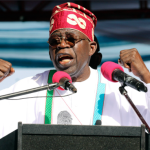
President Bola Tinubu has demanded a radical restructuring of the United Nations, insisting that Africa must be granted permanent representation on the Security Council, as he warned that the world of 2026 could no longer be governed by a power structure designed in 1945.
Tinubu, who spoke through Vice President Kashim Shettima at the General Debate of the ongoing 81st Session of the United Nations General Assembly, UNGA, in New York, demanded at least two permanent seats for Africa with full rights and responsibilities, including veto power, as well as five non-permanent seats.
He said the reform was necessary to make the UN more representative of contemporary global realities, stressing that Africa could no longer remain on the margins of decisions on international peace and security.
“The reform of this institution must begin with the reconstitution of the Security Council, for the world of 2026 cannot remain captive to the distribution of power in 1945. Africa cannot continue to fill the Council’s agenda while remaining absent from its permanent membership,” Tinubu declared.
The President said Nigeria’s demand was in line with the Ezulwini Consensus and Sirte Declaration, adding: “The authority to speak for humanity carries an obligation to represent it.”
Tinubu demands end to global wars
The President also issued a strong call for an immediate end to conflicts across the world, urging nations to return to the principles of dialogue, mutual respect, collective responsibility and international law upon which the United Nations was founded.
He warned against unilateral aggression and the growing tide of nationalism, saying no country could insulate itself from the consequences of conflicts elsewhere.
“The persistence of conflict across the world recalls the purpose for which the United Nations was founded: to spare succeeding generations the devastation of war,”he said.
“Nigeria stands by the Charter and its promise of a world in which diplomacy prevails over coercion, cooperation over isolation and international law over the arbitrary exercise of power,” he added.
Tinubu said Nigeria was prepared to assume greater responsibility for peace and security in Africa, recalling the country’s contributions to peacekeeping and conflict resolution in Liberia, Sierra Leone, Darfur, Mali and The Gambia.
He said Nigeria continued to advance mediation, democratic governance, counter-terrorism and maritime security through ECOWAS, the African Union and Gulf of Guinea partnerships.
Reform global financial architecture
Turning to the global economy, Tinubu called for a radical reform of the international financial architecture, including wider access to concessional financing and debt sustainability frameworks that recognise the development needs of poorer countries.
He said inadequate financing remained one of the biggest obstacles to sustainable development, as developing countries devote substantial resources to debt servicing at the expense of critical investments in education, healthcare and infrastructure.
“One of the greatest obstacles to sustainable development is inadequate financing,” the President said.
He linked Nigeria’s foreign policy objectives to its domestic economic reforms, citing disciplined macroeconomic management, stronger institutions, private-sector growth and strategic public investment as key elements of the country’s development strategy.
According to him, Nigeria’s progress must be viewed within the broader context of Africa’s development and the need for a global system that promotes peace, equity and prosperity.
Africa demands climate fairness
The President also called for greater fairness in global climate financing, rejecting what he described as a false choice between economic development and climate action.
He argued that developing countries must be allowed to industrialise, eradicate poverty and expand energy access through lower-carbon pathways supported by adequate climate finance and technology transfer.
Tinubu reaffirmed Nigeria’s commitment to the Paris Agreement and a fair energy transition, noting that Africa bears a disproportionate climate burden despite contributing less than four per cent of global emissions.
Under Nigeria’s Energy Transition Plan, he said the country was working towards net-zero emissions by 2060, while seeking to expand access to affordable, reliable and sustainable energy.
AI must serve humanity
On technology, Tinubu said Nigeria would not allow fear to dictate its approach to Artificial Intelligence, AI, describing the technology as a tool that could be deployed for human advancement.
He said Nigeria was expanding digital public infrastructure, accelerating broadband deployment and promoting technology entrepreneurship to position its youthful population to benefit from the digital economy.
The President called for international cooperation to ensure that emerging technologies contribute to improvements in healthcare, education, agriculture, governance and economic productivity.
Terrorism requires more than military action
Tinubu also drew from Nigeria’s experience in confronting Boko Haram, ISWAP and other armed groups, warning that no country could completely protect itself from threats sustained beyond its borders.
“No nation, however formidable its defences, can secure itself completely against dangers sustained beyond its borders,” he said.
He called for stronger international cooperation against terrorism and other transnational threats, including improved intelligence sharing, controls on terrorist financing and illicit arms flows.
But he stressed that military action alone could not deliver lasting peace, arguing that security operations must be backed by education, economic opportunity, accountable governance and respect for human rights.
As a founding member of ECOWAS, Tinubu said Nigeria remained committed to regional solidarity and African leadership in addressing security challenges, supported by principled international partnerships.
Tinubu calls for urgent diplomacy in Sudan
On the continuing conflicts in Sudan and other troubled regions, the President urged immediate diplomatic action to address their humanitarian, economic and geopolitical consequences.
He reaffirmed Nigeria’s commitment to the peaceful settlement of disputes in accordance with the UN Charter.
“We should all be afraid of a world in which we can no longer tell the victim from the aggressor. When our investment in propaganda shields perpetrators from justice to the point that telling the truth becomes a crime, the promise of this institution stands betrayed,” he said.
Tinubu said the effectiveness and credibility of the United Nations depended on its ability to uphold international law, protect civilians and provide a credible platform for resolving disputes.
He concluded by reaffirming Nigeria’s commitment to a stronger and more inclusive multilateral system.
“A reformed, inclusive and effective United Nations is indispensable to the peaceful, just and sustainable world that future generations deserve,” he said.
“Whatever our differences, we must remember that humanity is our oldest citizenship, and peace is the inheritance we owe every child,” the President added.