By Desire Obinna
As Nigeria yesterday joined the rest of the World to mark the 2026 African Traditional Medicine Day, the World Health Organisation, WHO, has said Africa cannot achieve universal health coverage without properly integrating traditional medicine into national healthcare systems.
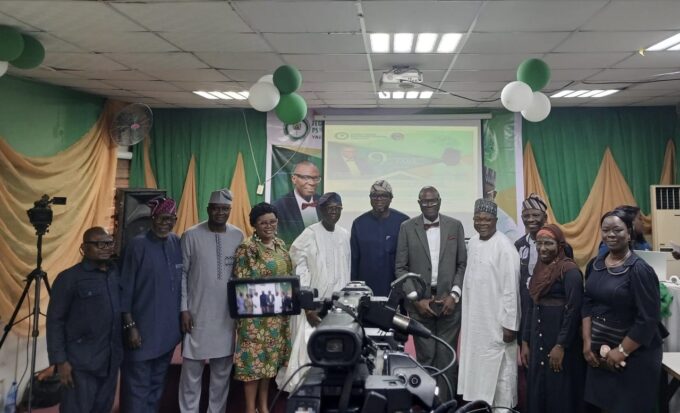
The WHO Head of Traditional Medicine, Dr Sungchol Kim, stated this during the activities marking the 2026 African Traditional Medicine Day organised by the Nigeria Natural Medicine Development Agency, NNMDA in Lagos.
Kim said traditional medicine had enormous potential to improve the health and wellbeing of millions of Africans, stressing that its integration into healthcare systems must, however, be based on scientific evidence, safety, quality assurance and effective regulation.
He said Nigeria was one of the countries with a rich tradition of traditional medicine, noting that the practice remained widely used by populations across the world.
According to him, about 180 of the WHO’s 194 member states recognise the use of traditional medicine, with between 40 and 99 per cent of their populations using it.
He said: “Traditional medicine has huge potential for the health and wellbeing of people, particularly through its holistic approach and naturalness, especially for chronic conditions.
“The WHO launched the Global Traditional Medicine Strategy in 2025 for the period 2025 to 2034. The strategy has a very clear vision of developing traditional medicine through evidence-based approaches, strong regulatory mechanisms and proper integration into the health system.”
Kim urged Nigeria to begin with systematic documentation of traditional medicine practices, adding that practitioners should also be trained in areas such as infection prevention and control.
He said: “Documentation of traditional medicine practice is super important for the country. We need to document what is being used by local communities and ensure that some quality standards are maintained.
“We also need to consider training programmes for local traditional medicine practitioners, particularly in infection control and prevention.”
The WHO official further called for a national licensing mechanism for traditional medicine practitioners, saying effective regulation was necessary to ensure that services and products were safe and of assured quality.
He said traditional medicine practitioners, researchers, clinicians and government must work together to develop a clear pathway for integrating proven traditional medicine interventions into national healthcare delivery.
Also speaking, Director-General of NNMDA, Prof Martins Emeje, said Nigeria must prioritise research and development of its traditional medicine resources to achieve medicine security and universal health coverage.
Emeje, a professor of pharmacy, said it was not enough for Nigerians to claim that traditional medicine was effective without subjecting its practices and products to appropriate research.
“Any country that underrates or does not prioritise research and development of its own natural resources towards getting local medicines will suffer from medicine insecurity,” he said.
“The beauty of natural medicine is that our food is the raw materials, the building blocks to making our medicines. Development of natural medicine means we are ensuring good food and medicine security. And you can only do this through research and development.”
He said research should not be limited to laboratories, explaining that valuable traditional knowledge could be documented by engaging practitioners who had spent decades working in communities.
“There are lots of research that we can do by just going to these people who have spent 30, 40 years practising traditional medicine, asking them questions, getting information, documenting it, curating it and screening it,” Emeje said.
The NNMDA boss said the agency had commenced digital documentation of traditional medicine practitioners, stressing that practitioners must first be identified and documented before effective regulation could take place.
“You cannot regulate properly those you don’t know. We first know these people, document them, their facilities, their personnel, what they do and their qualifications. Those that need training, we will train them,” he said.
Emeje said the agency had already completed documentation in one local government area and planned to expand the exercise nationwide.
He warned that practitioners who failed to comply with safety requirements would face sanctions.
“When we train you and tell you to make sure there is no fly where you are making your medicine and we see a fly there, we remove your licence and send you to jail,” he said.
The NNMDA DG also challenged the private sector to invest more in traditional medicine research and product development, saying Nigeria could not continue to depend heavily on imported medicines while neglecting its own natural resources.
According to him, the transformation of traditional medicine will require sustained investment over decades.
“All that is needed is for this momentum to be sustained for the next 25 years. We need to maintain this momentum,” he said.
“We have an advantage because we are not going to reinvent the wheel. We need to immediately tell ourselves as a people that we are not inferior to anything. We will agree to develop our own.”
Emeje said government and the private sector must invest heavily in research and development, adding that local production of medicines would create jobs and strengthen Nigeria’s health security.
He said: “The future is very bright. All we need is support, consistency and sustainability. If we do that, we will achieve our ultimate goal of ensuring universal health coverage.”
Also speaking at the event, keynote speaker, Prof Andrew Uloko, said traditional medicine could not be integrated into healthcare systems merely on the basis of historical use.
Uloko, a professor of medicine, said research and development remained the bridge between traditional knowledge and evidence-based healthcare.
“Traditional use is valuable, but traditional use alone does not prove safety or efficacy,” he said.
“There has to be a process. Research and development help us to establish safety, efficacy, quality, standardisation and formulation of the products that we are going to be using.”
He said Africa must move from treating traditional medicine merely as cultural heritage to developing it as a source of health innovation.
According to him, the process should include documentation, botanical authentication, phytochemistry, clinical research, standardisation, regulation and compliance.
Uloko said: “Research is the bridge between tradition and the modern healthcare system. It asks critical questions: Does this work? Is it safe? What is the appropriate preparation? Can the quality be consistently assured?”
He warned against both the uncritical acceptance and automatic rejection of traditional medicine, saying neither extreme would serve public health.
“The pathway forward is neither blind acceptance nor automatic dismissal. It is responsible, evidence-based development,” he said.
Uloko also urged government to increase funding for traditional medicine research and strengthen regulatory and quality-control systems.