By Desire Uzochukwu
An estimated 37 million Nigerian women and girls are facing period poverty, with rising menstrual product costs, inadequate water, sanitation and hygiene facilities, WASH, and limited access to quality products threatening their health, dignity and participation in school and work.
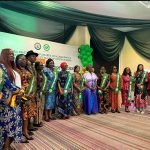
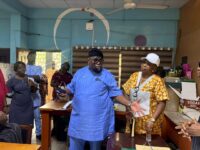
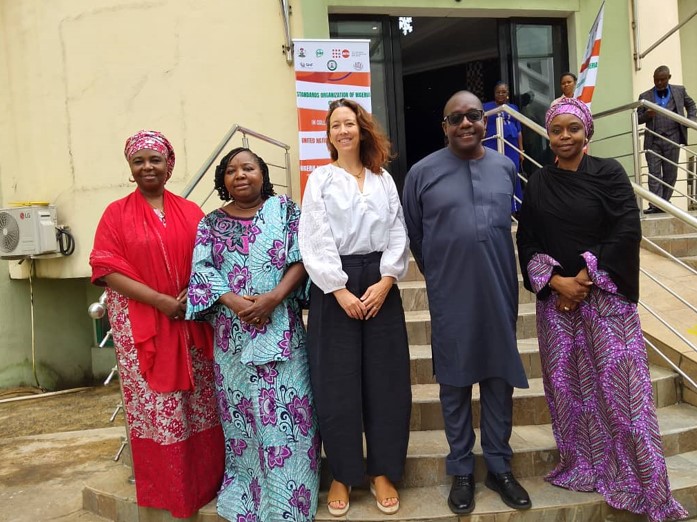
The situation came under focus in Lagos at the Nigeria Menstrual Health Forum, themed “Driving Standards and Policy Reform for Affordable Menstrual Products,” where stakeholders called for urgent reforms to make menstrual products more affordable, accessible and safe.
The two-day forum brought together government agencies, regulators, manufacturers, private sector players, civil society organisations and development partners to address barriers confronting menstrual health management, MHM, in Nigeria.
The forum was funded by the Sanitation and Hygiene Fund, SHF, and led by the United Nations Population Fund, UNFPA, in collaboration with the Standards Organisation of Nigeria, SON, and the Federal Ministry of Women Affairs and Social Development.
Stakeholders said inflation had compounded the problem, with the price of menstrual pads rising from about N200–N400 three years ago to N500–N750 or more.
As a result, some women and girls, particularly those from low-income households, have resorted to unsafe alternatives such as old cloth, mattress foam and reused pads.
Speaking at the forum, UNFPA Gender and Adolescent Unit representative, Dr Zubaida Abubakar, said the solution was not for government to shoulder the entire cost of subsidising menstrual products but to create an enabling environment for manufacturers to produce affordable, quality commodities locally.
“We cannot expect the government alone to be responsible for subsidising menstrual commodities. What we want to do is make sure that the manufacturers are enabled to be able to produce them at a lower cost,” she said.
Abubakar said increasing local production would make it possible to reach more women and girls sustainably.
“Really, how many can we donate? So the best thing is to flood the market with affordable, quality-standard products,” she said.
She stressed that affordability must go hand in hand with safety and quality, warning against flooding the market with substandard menstrual products.
The affordability crisis also has implications for education. UNICEF estimates that 24 per cent of schoolgirls regularly miss classes because of inadequate menstrual materials and poor WASH facilities.
Head, National Product Certification Department, SON, Mrs Phebean Arumemi, said applying standards could help manufacturers reduce production costs by improving efficiency and minimising waste.
“One of the key benefits from standards is cost management,” Arumemi said.
She explained that SON was working with manufacturers, particularly micro, small and medium enterprises, MSMEs, to help them understand and meet required standards.
“Our first priority is not to close down factories. It is mentorship support to help them escalate from where they are now,” she said.
Arumemi said the ultimate goal was to help local manufacturers produce safe, effective and cost-efficient products capable of competing in the market.
Also speaking, Elisha Sule of SHF said stronger coordination among manufacturers, regulators, investors and development partners was necessary to move the menstrual health sector forward.
“The businesses are there, the regulators are there, NAFDAC is there, SON is there. We need someone to bring us all together to keep talking. And so, without that coordination, we’re not going to be able to move forward,” Sule said.
He noted that many women-led businesses in the sector needed capacity building and access to finance to expand production.
Investment adviser, Kunle Awolowo of ONYX Investment Advisory Limited, advocated greater import substitution, noting that some local manufacturers depend heavily on imported inputs, increasing production costs.
He also suggested innovative packaging and product sizes to make menstrual products accessible to consumers across different income groups.
Meanwhile, founder of SurPads, Olorunfemi Boluwatife, highlighted reusable menstrual products as another option for underserved communities, particularly where disposable pads are difficult to afford or access.
The forum is part of the SHF-funded Menstrual Health & Hygiene: Unlocking Women’s Power initiative, led by UNFPA across six African countries.
Nigeria has adopted the Africa Regional Standard for menstrual products and is pursuing ISO certification. It has also developed the National Policy on Menstrual Health and Hygiene Management, 2025–2030.
Stakeholders said effective implementation of the policy, alongside stronger regulation, local manufacturing, fiscal reforms and investment, could help reduce period poverty.
They stressed that menstrual health is not merely a women’s issue but a public health, education, gender equality and economic development concern.
Ending period poverty, they said, would restore dignity, improve health and enable more women and girls to stay in school, work and participate fully in society.