By Desire Uzochukwu
Uganda has asked Nigeria to provide detailed travel and clinical records of a Nigerian woman confirmed to have Ebola Virus Disease (EVD) in Abuja, as authorities seek to establish where she contracted the infection and determine whether further cross-border contact tracing is necessary.
The request followed Nigeria’s confirmation of the case on Tuesday after laboratory testing identified the infection in a woman who recently arrived in the country following travel involving Uganda and the eastern Democratic Republic of the Congo (DRC).
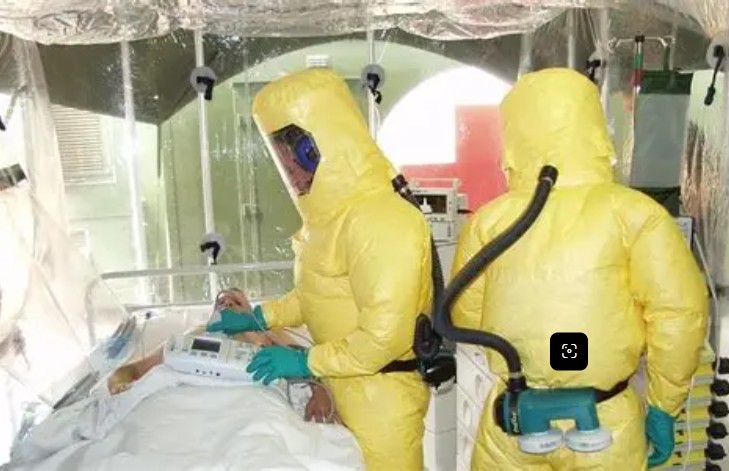
The woman is currently receiving medical care in isolation in the Federal Capital Territory (FCT), Abuja.
In a statement issued in Kampala on Tuesday, the Director General of Health Services at Uganda’s Ministry of Health, Prof. Charles Olaro, said detailed information from the Nigerian government was needed to guide further investigations and determine whether additional public health measures were warranted.
However, Uganda stressed that the woman’s transit through the country did not establish that she contracted the virus there, noting that the location of exposure remained under investigation.
According to the statement, preliminary information indicated that the woman had travelled to the eastern DRC for business and transited through Uganda in early October without displaying symptoms. She reportedly developed symptoms after arriving in Nigeria.
The Ugandan authorities said they were awaiting the woman’s detailed travel itinerary and clinical history from Nigeria to help reconstruct her movements and assess any potential exposure risks.
The statement, titled: “Reported Ebola Case in Nigeria: Ministry Calls for Calm and Vigilance,” said the information would guide further investigations and any necessary contact-tracing activities.
“The Government of Nigeria is yet to provide detailed information on the woman’s travel itinerary and clinical history to guide further investigations and any necessary contact tracing,” the ministry stated.
Uganda Rules Out Confirmed Active Cases
The Ugandan Ministry of Health also clarified that, as of the date of its statement, the country had no confirmed active Ebola cases.
It urged the public to remain calm while health authorities worked to establish the circumstances surrounding the infection and determine whether any additional surveillance measures were required.
The ministry said it would strengthen screening and other public health measures at points of entry in collaboration with relevant agencies.
It added that limited provisions remained in place to facilitate humanitarian and diplomatic movements while relevant authorities continued their public health preparedness efforts.
Cross-Border Surveillance Intensified
The development underscores the importance of cooperation between countries in investigating suspected exposure to infectious diseases, particularly when patients have travelled through multiple jurisdictions before symptoms emerge.
Detailed travel histories, clinical records and timely information-sharing can help health authorities identify people who may have been exposed, establish relevant timelines and determine whether additional monitoring or contact tracing is necessary.
For Nigeria and Uganda, the immediate priority is to establish the woman’s movements and possible exposure history without prematurely attributing the source of infection to any particular country.
The Ugandan government’s request for further details is expected to support that process as public health authorities continue their investigations.
The location where the woman contracted Ebola has not been established in the information provided by the authorities.