By Chidimma Oparaochaekwe
The HealthCare Providers Association of Nigeria (HCPAN), Lagos Branch, has called for urgent measures to expand health insurance coverage among informal-sector workers and introduce fair tariffs for healthcare providers, warning that low enrolment and high out-of-pocket spending continue to limit access to affordable medical care.
The association also identified delayed claims payments, exclusion of some healthcare professionals from insurance schemes and tariffs that fail to reflect prevailing economic realities as major challenges threatening providers’ participation in health insurance programmes.
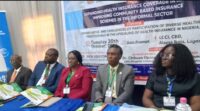
Chairman of HCPAN Lagos Branch, Pharmacist Biola Paul-Ozieh, made the call at the association’s Scientific Conference and Annual General Meeting (AGM), held at the Lagos Chamber of Commerce and Industry (LCCI), Ikeja, Lagos.
The conference, themed, “Expanding Health Insurance Coverage in Nigeria: Improving Community-Based Insurance Schemes in the Informal Sector,” examined strategies for extending coverage to traders, artisans, transport workers and other Nigerians outside the formal employment system.
Paul-Ozieh said only about 10 to 13 per cent of Nigerians were covered by health insurance, while out-of-pocket payments accounted for roughly 70 per cent of healthcare expenditure.
“Currently, it is reported that about 10 to 13 per cent of the Nigerian population is covered by health insurance. The out-of-pocket expenditure is still huge at roughly 70 per cent despite the mandatory clause in the NHIA Act 2022,” she said.
She added that coverage of vulnerable groups stood at about 3.8 million, while enrolment among informal-sector workers remained limited and concentrated largely in Lagos and Abuja.
According to her, the conference was designed to stimulate discussions on sustainable community-based insurance schemes and strengthen collaboration between government and private healthcare providers.
“The other concern we have as providers is the various challenges faced by varied professionals in not being included in the provision of health services in the health insurance programme,” she said.
Informal workers need flexible insurance plans
Chief Executive Officer of DrugStoc Limited, Dr Chibuzo Opara, represented by Dr Damilare Ojo, said the success of health insurance should be measured by whether enrollees could obtain quality healthcare and prescribed medicines without pushing their households into financial hardship.
“What does it mean to have health insurance if, when illness occurs, the person cannot access the care needed?” he asked.
Opara said existing insurance arrangements had left many traders, artisans, transport workers and small business owners without adequate financial protection against medical expenses.
He noted that irregular earnings made it difficult for informal-sector workers to sustain fixed contributions, urging stakeholders to develop insurance models that reflect their economic circumstances.
“We cannot close this gap by simply increasing enrolment in existing schemes. If we genuinely want to achieve universal health coverage, we must develop insurance models that address the needs of the people we intend to cover,” he said.
He called for flexible contributions, appropriate benefit packages and group enrolment through trusted associations, while identifying affordability, public mistrust, delayed claims, limited service availability and technology gaps as barriers to wider participation.
Opara also advocated the integration of community pharmacies into insurance schemes, noting that their accessibility could improve access to medicines and initial healthcare services.
He urged stakeholders to assess insurance schemes through measurable outcomes, including access to medicines, service utilisation, referral outcomes, claims-processing times, policy renewals and reductions in out-of-pocket expenditure.
Lagos targets grassroots enrolment
The Lagos State Government has reaffirmed its commitment to expanding health insurance through affordable premiums, grassroots enrolment and the integration of community pharmacies and diagnostic centres into healthcare delivery.
Commissioner for Health, Prof. Akin Abayomi, represented by the Deputy Director of the Research Unit at the Lagos State Ministry of Health, Dr Tolu Babatope, said informal-sector workers often faced financial difficulties when paying for medical treatment.
“The informal sector represents a significant proportion of the population in Lagos State. It includes market traders, artisans, transport workers and micro-entrepreneurs,” he said.
Abayomi said the Lagos State Health Management Agency (LASHMA) was expanding affordable premium options and grassroots enrolment programmes in line with the state’s mandatory health insurance policy.
He described community pharmacies as important entry points into the healthcare system, saying their integration into insurance schemes could bring services closer to residents.
“Community pharmacies, therefore, are no longer merely places where medicines are dispensed. They can serve as important points of contact for healthcare services and entry points into the health insurance network,” he said.
The commissioner acknowledged concerns over provider tariffs, delayed claims and inadequate digital infrastructure, while highlighting the Lagos Private Health Partnership and Lagos Smart Health Information Platform (SHIP) as initiatives to improve coordination among hospitals, clinics, diagnostic laboratories, pharmacies and insurers.
The platform is expected to support patient identification, medical records, electronic referrals, prescriptions and claims processing, with plans to extend its reach to private healthcare providers.
Abayomi also outlined state health infrastructure projects, including Massey Street Children’s Hospital, the 280-bed Ibeju-Lekki General Hospital and a proposed 1,500-bed mental health facility at K2, Agege.
Other initiatives include upgrades to primary healthcare facilities across the state’s 57 local government areas and local council development areas.
NHIA seeks tariff review, faster payments
The Lagos Zonal Coordinator of the National Health Insurance Authority (NHIA), Pharmacist Femi Adeoye, represented by the State Coordinator at the NHIA Yaba Office, Pharmacist Chinenye Nwaohiri, highlighted opportunities for healthcare professionals to participate in expanding insurance coverage.
Adeoye said the NHIA operated programmes covering formal-sector workers, informal groups, private-sector participants and state health insurance schemes, with health maintenance organisations supporting service delivery.
He also cited the Basic Health Care Provision Fund and the Vulnerable Group Fund as mechanisms designed to improve access for Nigerians who might otherwise struggle to afford treatment.
Calling for tariff reviews that reflect the cost of providing healthcare, Adeoye said timely reimbursement was essential to encouraging providers to participate in insurance schemes.
“Fair tariff reviews and timely payment for services are essential to encouraging healthcare providers to participate in health insurance schemes and ensuring sustainable service delivery,” he said.
He added that public confidence depended on enrollees receiving timely and appropriate care, stressing that reliable service delivery was necessary to sustain participation.
Healthcare professionals urged to collaborate
Earlier, Chairman of the conference’s organising committee, Pharmacist Lawrence Ekhator, called for stronger collaboration among healthcare professionals, saying no single profession could independently meet the population’s healthcare needs.
“No single profession can deliver healthcare alone. It is the strength of our collaboration that saves lives, restores function, and gives hope to patients and their families,” he said.
Ekhator described the conference theme as timely, given the country’s rising disease burden, limited resources, workforce shortages and rapid technological changes.
In his goodwill message, HCPAN National President, Dr Austin Aipoh, advocated stronger stakeholder collaboration and flexible payment arrangements to make health insurance more accessible to informal-sector workers.
Aipoh urged policymakers to create an enabling environment for healthcare providers, stressing that insurance schemes must support both patients and the professionals responsible for delivering care.
Meanwhile, the Secretary of the Health Facility Monitoring and Accreditation Agency (HEFAMAA), Dr Victoria Egunjobi, represented by Dr Iboma Godswill, emphasised the importance of regulation and quality assurance.
Godswill urged healthcare facilities to meet registration and accreditation requirements, maintain appropriate equipment, employ qualified personnel and keep proper records, noting that compliance was essential to patient safety and public confidence.
The conference called for coordinated action by government, insurers and healthcare professionals to widen insurance coverage, improve claims settlement, review provider tariffs and reduce the financial burden of medical treatment on informal-sector workers.