By Chidimma Oparaochaekwe
The Lagos State Government, through the Primary Health Care Board (LSPHCB), in collaboration with Engender Health Consortium, has called for stronger community participation and increased funding for routine immunisation to reach an estimated 119,000 zero-dose children who have not received their first dose of the Pentavalent vaccine.
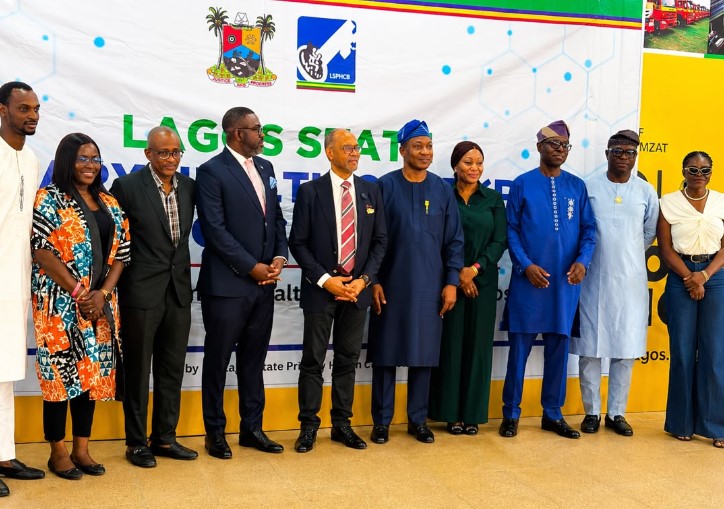
The Permanent Secretary, Lagos State Primary Health Care Board (LSPHCB), Dr Ibrahim Akinwunmi Mustapha, made the call while representing the Deputy Governor and Chairman of the Lagos State Primary Health Care Task Force, Dr Obafemi Hamzat, at the Primary Health Care Task Force meeting held at the Bagauda Kaltho Press Centre, Alausa, Ikeja.
Mustapha said the high rate of migration into Lagos from other states had contributed to the number of children yet to receive routine immunisation. He stressed that the government was committed to reaching every child, regardless of their place of origin, and urged traditional and religious leaders, local government and LCDA chairmen, security agencies and the media to support efforts to reach underserved communities.
“Lagos still has 119,000 zero-dose children, that is children who have not received the first dose of the Pentavalent vaccine. Every one of them is a child exposed to diseases we know how to prevent.”
He said the Task Force had identified six priority areas, including stronger community engagement, improved cold-chain capacity for vaccine storage, and better coordination among the Ministries of Health, Education and Environment, expansion of digital services in primary healthcare centres, nutrition education and family planning awareness, as well as dedicated local government funding for routine immunisation.
“Our shared task is to make sure that what we have built together is sustained by our own resources.”
In his welcome remarks, the Lagos State Commissioner for Health, Professor Akin Abayomi, said primary healthcare remained the foundation of the health system and should serve as the first point of contact for residents seeking medical attention.
He explained that the platform should be able to manage most medical conditions, while patients requiring specialised care would be referred to secondary and tertiary facilities and later returned to their primary healthcare centres for continued care.
Abayomi also said the state was improving healthcare infrastructure through approved designs for primary healthcare centres, with construction already underway in some locations.
He disclosed that the government was preparing to build 12 flagship primary healthcare facilities in 2027 to improve access to quality services.
He added that the state was working towards digitalising all government health facilities within the next six to nine months, while promoting health insurance and preventive care.
“We also want to build public confidence so that residents do not abandon primary healthcare facilities for other healthcare providers or informal centres.”
On disease prevention, the Commissioner said findings from the state’s malaria programme showed that fewer than five out of every 100 fever cases were caused by malaria.
He said the government had introduced a policy requiring healthcare providers to conduct rapid diagnostic tests before prescribing antimalarial drugs.
He also urged residents to undergo regular checks for hypertension, diabetes and other non-communicable diseases.
Presenting the progress report on the Task Force’s action points, the Director of Digital Health and Transformation, Dr Ladi Abudu, said all five walk-in cold rooms in the state had been renovated, while 46 out of 67 faulty cold-chain equipment units had been repaired.
“Lagos State has five walk-in cold rooms and one walk-in freezer. All five walk-in cold rooms were renovated.”
He added that 155 additional primary healthcare centres had been digitalised, bringing the total to 257, with 140 tablets provided and 320 health workers trained.
Abudu said immunisation campaigns had reached 125 schools, while more than 250,000 information, education and communication materials had been distributed. He added that about 240 radio and community sensitisation campaigns had also been conducted to educate residents and encourage the use of health services.
Giving the Routine Immunisation and Surveillance Feedback for the first three quarters of 2026, the Head of Immunisation Services, LSPHCB, Dr Bunmi Akinlade, identified vaccine supply gaps, inadequate tracking of children and women who miss immunisation appointments, and difficulties reaching residents in large slums and mobile communities as some of the challenges affecting routine immunisation.
She called for dedicated funding from the state and local governments, particularly for high-burden local government areas, as well as improved vaccine delivery and maintenance of cold-chain equipment.
“First, we need dedicated funding for routine immunisation from both the state and local governments. We also need to prioritise high-burden local government areas.”
She also urged authorities to strengthen monthly immunisation review meetings and support vaccination programmes, including HPV vaccination for girls and young women.
Presenting the Lagos State Primary Healthcare Performance Report for the first three quarters of 2026, the Head of the Monitoring and Evaluation Unit, LSPHCB, Dr Amodu Abioye, said primary healthcare centres had recorded about 2.1 million patient visits, accounting for 32 per cent of visits to public health facilities. He added that the centres provided 94 per cent of immunisation services across the state, while electronic medical records were available in 297 facilities.
“The data speak for themselves. The performance indicators are improving.”
Abioye also identified gaps in healthcare infrastructure, staffing and funding. He said 105 wards were without primary healthcare centres, while only 86 facilities were providing 24-hour services. He further disclosed that the state needed 1,129 additional skilled birth attendants to meet the minimum staffing requirement across its facilities. He called for more investment in health workers, electricity, digital equipment and other essential services.
In her goodwill message, the Special Adviser to the Governor on Health, Dr Kemi Ogunyemi, urged health authorities to sustain improvements in service delivery and ensure that primary healthcare facilities were clean, functional and welcoming to patients. She stressed the need to improve the attitude of healthcare workers, strengthen community education and encourage residents, particularly men, to access preventive health services.
“Everything we do in the health sector must be centred on one person: the patient.”
Ogunyemi also called for reliable data, adequate funding and continued investment in health workers, noting that the purpose of every government health programme was to improve the quality of care received by patients.
“Being better than another state does not necessarily mean we are doing well enough. We want to achieve the highest standards and become a state that others cannot easily surpass.”
Among the priorities outlined for 2027 were reaching every zero-dose child and underserved community, ensuring that every ward had a functional primary healthcare centre, upgrading at least one additional facility in each local government area and LCDA to provide 24-hour services, and establishing dedicated budget lines for routine immunisation and primary healthcare work plans.
Other priorities include recruiting and retaining more skilled health workers, improving demand for routine immunisation and essential health services, and providing support for the maintenance and use of electronic medical records in primary healthcare centres.
The meeting underscored the need for sustained commitment from all stakeholders to turn the 2027 priorities into measurable improvements in healthcare delivery.
Participants were urged to ensure that identified gaps in infrastructure, staffing, funding and immunisation coverage are addressed through concrete actions, regular monitoring and effective coordination across all levels of government.
- 12 flagship primary healthcare facilities
- Dr Ibrahim Akinwunmi Mustapha
- Dr Obafemi Hamzat
- immunisation
- Lagos State Commissioner for Health
- Lagos State Primary Health Care Board (LSPHCB)
- Lagos State Primary Health Care Task Force
- LSPHCB
- one walk-in freezer
- Permanent Secretary
- Primary Health Care Task Force
- Professor Akin Abayomi
- Zero dose children