By Destiny Obinna
The Civil Society-scaling up Nutrition in Nigeria (CS-SUNN) has raised the alarm over declining government investment in nutrition, revealing that Lagos State’s nutrition budget performance dropped sharply to about 10 per cent in 2025 from 81.5 per cent in 2024.
The organisation warned that inadequate budgetary allocations, poor release of approved funds and weak expenditure tracking could undermine efforts to tackle malnutrition among children and women, urging journalists to hold governments accountable for their nutrition commitments.
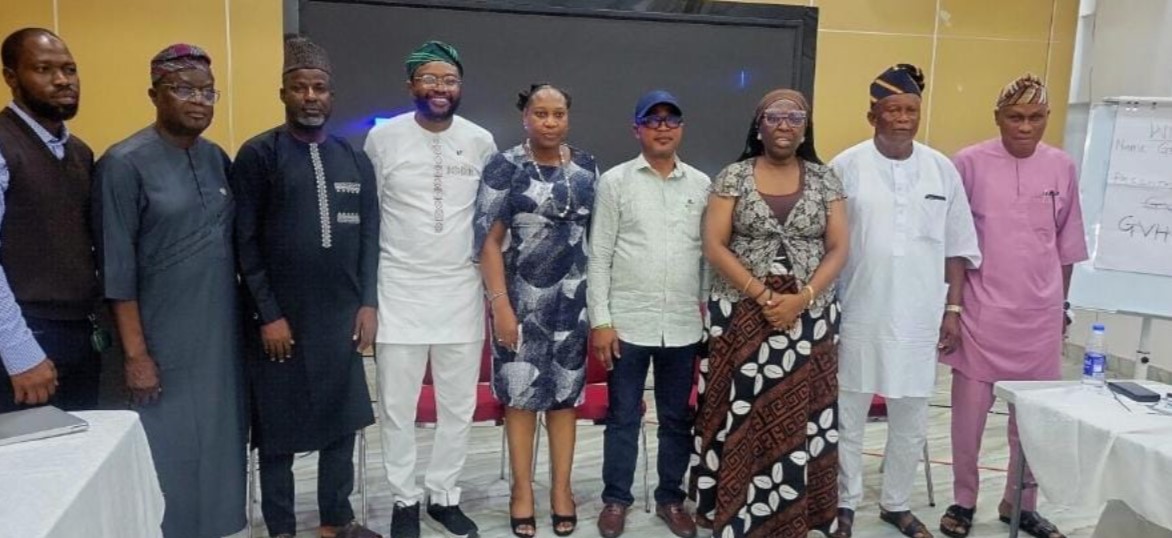
The warning came at the Lagos State Strategic Media Engagement Forum on Domestic Nutrition Financing, organised by CS-SUNN at Dover Hotels, Ikeja, where nutrition experts and journalists examined funding gaps and the implications for maternal and child health.
Presenting a technical paper titled, “Understanding Nigeria’s Domestic Nutrition Financing Landscape”, Senior Programme Officer of CS-SUNN, Ambrose Evhoesor, said Lagos State’s declining budget performance raised serious questions about the translation of government commitments into actual interventions.
He disclosed that the state allocated approximately N321 million to nutrition in 2023, when budget performance stood at about 13 per cent. Although performance improved to 81.5 per cent in 2024, it fell to approximately 10 per cent in 2025, despite a budget allocation of about N309 million.
Evhoesor said the situation underscored the need to move beyond budgetary promises to actual funding releases and effective utilisation.
“It is not enough for government to allocate funds in the budget. The money must be released and properly utilised for the intended purpose,” he said.
Highlighting the financial implications of malnutrition, he put the estimated cost of treating a child with severe acute malnutrition at about N250,000, with the total treatment requirement for affected children in Lagos estimated at approximately N47 billion.
This, he said, contrasted sharply with an allocation of about N596 million presented at the engagement, exposing the enormous financing gap confronting nutrition interventions.
He argued that governments must prioritise preventive nutrition programmes rather than allow more children to develop severe malnutrition, which requires expensive treatment.
Among the challenges he identified were inadequate allocations, delayed fund releases, population growth and weak budget monitoring.
Evhoesor also challenged journalists to investigate the Child Nutrition Fund, particularly how much Lagos State had contributed since its establishment in 2023, noting that the initiative provides an opportunity for states to attract additional resources for nutrition programmes.
He urged media professionals to scrutinise every stage of public expenditure, from appropriation and approval to release and utilisation.
“Journalists must ask questions about what was budgeted, what was released and what was eventually spent,” he said.
The CS-SUNN programme officer warned that malnutrition carried consequences beyond healthcare, including poor educational outcomes, reduced workforce productivity, increased medical expenditure and slower economic growth.
He described nutrition as an investment in human capital development, stressing that healthy children were better positioned to learn, develop and contribute meaningfully to the economy.
In her presentation on the objectives of the engagement, CS-SUNN’s Senior Communication Officer, Lilian Okafor, called for a shift from routine event reporting to investigative and solutions-oriented journalism that connects government spending decisions with the experiences of vulnerable families.
She said the media must help policymakers understand the consequences of inadequate nutrition funding by amplifying the experiences of women and children affected by hunger and malnutrition.
“The essence of this engagement is to encourage solutions-oriented journalism. We do not just want reports that describe problems; we want stories that can help prevent children from becoming malnourished,” Okafor said.
She identified evidence-based reporting, sustained media partnerships, strategic advocacy and expanded public discourse as key objectives of the engagement.
Okafor also urged journalists to make nutrition financing a regular subject of public discussion, particularly during budget preparations and election campaigns.
“We want nutrition financing to become a consistent subject of public discussion, particularly as elections approach and political leaders begin to make promises and set priorities,” she said.
She subsequently unveiled CS-SUNN’s Strategic Media Engagement Package, comprising a nutrition financing media toolkit, policy brief, budget snapshots, digital media resources, social media cards, short videos and a nutrition financing jingle.
The materials also contain suggested interview questions, frequently asked questions, key statistics, story ideas and explanations of common misconceptions about nutrition financing.
Okafor said the resources were designed to help journalists simplify technical information, investigate government expenditure and communicate the importance of nutrition investment.
She disclosed that CS-SUNN’s investment case showed that every N1 invested in nutrition could generate returns ranging from N2.70 to N14.60, while Lagos State’s estimated return on investment stood at approximately N2.79.
“Nutrition is an investment, not an expenditure,” she said.
In her goodwill message, Lagos State Nutrition Officer, Ministry of Health, Taiwo Fadairo, commended CS-SUNN for mobilising media support for improved nutrition financing.
She said adequate funding was required across several areas, including breastfeeding, maternal, infant and young child nutrition, micronutrient deficiency control, adolescent nutrition, geriatric nutrition and capacity building.
Fadairo disclosed that Lagos State had established Local Government Committees on Food and Nutrition to extend interventions to grassroots communities, with plans to strengthen the structures at ward and community levels.
She emphasised the importance of the first 1,000 days, from conception to a child’s second birthday, describing the period as critical to preventing malnutrition and ensuring healthy development.
“Malnutrition is an underlying factor in many infections and diseases. If it is properly addressed, we will see improvements in several health indicators, including stunting, wasting and underweight rates, as well as maternal mortality and morbidity,” she said.
Acknowledging the funding gaps highlighted at the forum, Fadairo called for stronger public-private partnerships to complement government efforts.
“We definitely have a huge gap that needs to be filled, and the government alone cannot do it,” she said.
Sharing experiences from Kwara State, CS-SUNN’s Ex-Officio, Francis Fatoye, explained how sustained advocacy had helped expand nutrition financing beyond the Ministry of Health to other ministries and local governments.
He said the organisation engaged the state House of Assembly and government departments to demonstrate that nutrition was a multi-sectoral responsibility involving education, women affairs, health and local government institutions.
According to him, the advocacy resulted in other ministries making budgetary provisions for nutrition activities, while local governments began receiving allocations by the third year of engagement.
He also disclosed that Local Government Plans of Action for Nutrition had been developed for all 16 local government areas in the state.
Fatoye identified Kwara’s approval of six months’ fully paid maternity leave as another important policy achievement supporting exclusive breastfeeding and maternal and child nutrition.
Using a crumpled sheet of paper to illustrate the difficulty of reversing the effects of malnutrition, he urged journalists to focus on prevention.
“When a child becomes wasted, it is not easy to restore that child to a healthy nutritional state. That is why we must prevent children from becoming wasted in the first place rather than waiting until the condition becomes severe,” he said.
Similarly, Abia State Coordinator of CS-SUNN, Richard Okoro, said advocacy had helped draw government attention to malnutrition, which he said was previously overshadowed by infrastructure development.
He listed the approval of maternity and paternity leave, development of a strategic nutrition framework, establishment of a Local Government Committee on Food and inauguration of the state’s Nutrition Council among the outcomes of the engagement.
However, he expressed concern that less than eight per cent of the presented nutrition budget had been released, while some local government committees were yet to meet regularly.
“We cannot keep waiting for CS-SUNN, UNICEF and others to come to manufacture money,” he said, urging state governments to take greater responsibility for financing nutrition programmes.
He added: “Children cannot learn effectively when they are hungry.”
The Lagos State Chapter Coordinator of CS-SUNN, Samuel Akinyode, urged journalists to use political debates, public meetings and election-related engagements to demand specific nutrition commitments from candidates.
He also raised concerns about inadequate capacity among nutrition desk officers and the consumption of fake and adulterated vegetable oils, calling for stronger public attention to food safety.
“We can use these opportunities to raise questions about nutrition financing and what political candidates intend to do about it,” he said.
Participants urged journalists to sustain coverage of nutrition financing and ensure that government promises translate into improved services and better health outcomes for women and children.