By Joyce Ekeh
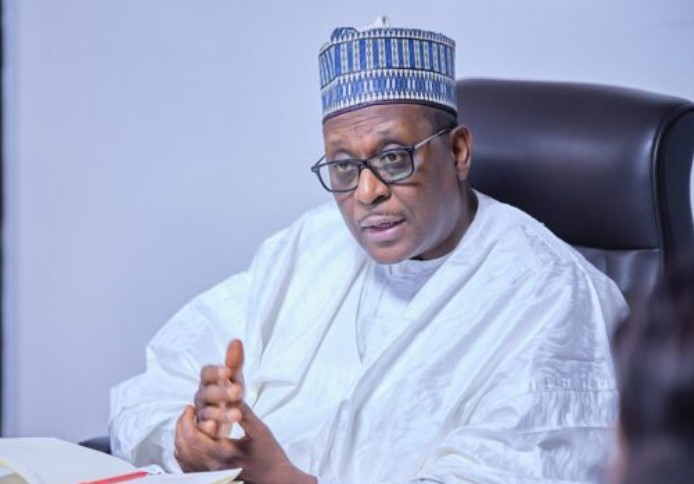
Nigeria’s health budget allocation has risen to six per cent from about three per cent in previous years, the Coordinating Minister of Health and Social Welfare, Professor Muhammad Ali Pate, has said, as the Federal Government steps up efforts to tackle the growing burden of hypertension, diabetes, stroke, cancer and other non-communicable diseases (NCDs).
Pate also disclosed that nearly 80,000 frontline health workers had been retrained in the past three years, while the government was expanding diagnostic services, primary healthcare and specialised medical facilities to improve early detection and treatment.
The minister spoke in Abuja at the public presentation of the National Health Review 2025, a publication on non-communicable diseases in Nigeria, organised by the Health Sector Reform Foundation of Nigeria (HERFON).
He warned that NCDs were becoming an increasingly significant part of Nigeria’s disease burden, requiring a shift towards preventive healthcare, routine screening, affordable medicines and sustained treatment.
“In the past 30, 40 years, infectious diseases, maternal and child health were the main issues. They are still with us,” Pate said.
“But NCDs, even though smaller, are becoming an increasingly faster-growing segment of our burden of disease.”
According to him, changing lifestyles and an ageing population are contributing to the rising prevalence of chronic illnesses, many of which remain undiagnosed or poorly controlled until they result in severe complications.
He identified hypertension and diabetes as major concerns, stressing that early diagnosis and access to continuous treatment were essential to reducing avoidable complications and premature deaths.
FG retrains 80,000 health workers, expands diagnostics
Pate said the government was implementing reforms under the Health Sector Renewal Investment Initiative to improve healthcare governance, financing, accountability and coordination across the three tiers of government.
He urged state governments to increase their healthcare spending, particularly on primary healthcare, to complement federal investments and bring essential services closer to communities.
“With the Federal Government leading and intervening, and with states getting a lot more resources now, our fiscal position has improved.
“But we need to get states to also join in this by putting resources so that we will get the health system that we need, the primary healthcare system, to function,” he said.
The minister disclosed that nearly 80,000 frontline health workers had undergone retraining in three years, while capacity for medical education had also expanded, including a doubling of training capacity for medical students.
On specialised healthcare, he said three of six planned world-class health centres had been commissioned, while two of 10 completed diagnostic centres had recently been inaugurated in Ibadan, Oyo State, and Bauchi State.
The diagnostic facilities, he said, were equipped to provide advanced services, including magnetic resonance imaging, computed tomography scans and cardiac catheterisation.
Pate further disclosed that the Federal Executive Council had recently approved nearly ₦268 billion for major infrastructure projects at the National Hospital, Abuja.
He said the investments were expected to strengthen tertiary healthcare delivery, expand cancer care infrastructure and improve access to specialised medical services.
Maternal deaths fall 22%, malaria incidence drops
The minister also reported improvements in maternal and child health outcomes, saying maternal deaths had declined by 22 per cent in targeted local government areas over three years, while newborn deaths had fallen by 10 per cent.
He cited improvements in skilled birth attendance and other maternal health indicators, adding that malaria incidence had dropped to about 15 per cent, its lowest level in two to three decades, according to survey statistics he referenced.
Pate said the government was expanding primary healthcare services to enable Nigerians to undergo screening and receive early treatment for hypertension, diabetes and other chronic conditions before they develop serious complications.
He also highlighted the government’s “Know Your Numbers” campaign, which he said had reached about 10 million Nigerians, encouraging them to check their blood pressure, blood sugar and cholesterol levels.
He urged Nigerians to take routine health checks seriously, noting that early detection could improve disease management and slow the progression of chronic illnesses.
FG targets cheaper medicines, wider insurance coverage
On access to medicines, Pate said the government had approved a group purchasing mechanism designed to aggregate public-sector buying power and ensure the supply of quality medical commodities to thousands of federally supported primary healthcare centres.
The initiative, he said, was expected to reduce procurement costs, improve access to essential medicines and support local pharmaceutical manufacturing.
He also stressed the importance of expanding health insurance coverage, particularly because patients living with hypertension and diabetes often require lifelong medication, laboratory tests and regular follow-up care.
“Now we are coming to the era of non-communicable diseases where, if you have diabetes or hypertension, you are on lifelong treatment. That has costs,” he said.
Pate said the government was working with state authorities to expand health insurance coverage and reduce the financial burden of accessing healthcare.
Niger State seeks stronger primary healthcare response
Also speaking at the event, the Niger State Commissioner for Health, represented by a state official, said the government was committed to building a responsive, accessible and sustainable healthcare system through its Niger Health Agenda.
The commissioner identified prevention, routine screening, reliable health data, affordable medicines and diagnostic services as essential components of the state’s response to NCDs.
He called for the integration of disease prevention, screening and treatment into primary healthcare services to improve early detection and access to care.
“The buzzword now in the development space is integration, and I think this book will go a long way to help us understand how to do it better,” he said.
He added that affordable medicines and accessible diagnostic services were critical to managing chronic illnesses and reducing the financial pressure they place on households.
The commissioner also called for sustained collaboration among governments, researchers, healthcare professionals, development partners, communities and the private sector to translate the publication’s findings into practical interventions.
He said Niger State remained open to partnerships aimed at strengthening disease prevention and improving healthcare delivery.
HERFON unveils 1,325-page NCD review
In his remarks, the chairman of the occasion, His Royal Highness, Dr Haliru Ndanusa Yahaya, described the publication as an important contribution to health research and policy development in Nigeria.
He said the two-volume book contained 1,325 pages and 37 chapters written by 75 Nigerian authors based within and outside the country.
Yahaya said the growing burden of hypertension, stroke, kidney failure and cancer was placing increasing pressure on families and healthcare facilities.
He urged the Federal Government to adopt the publication as a reference resource for medical schools, nursing schools and other public health institutions.
He also called on the private sector and philanthropic organisations to support the distribution of the book to health institutions and communities across the country.
Yahaya challenged HERFON to translate the publication’s findings into policy briefs, electronic materials, infographics and other accessible formats to help healthcare workers and members of the public understand and act on its recommendations.
Earlier, the chairman of HERFON’s Board of Trustees, Dr Idris Mohammed, said the publication resulted from a comprehensive review involving more than 70 experts from Nigeria and other countries.
He said the book was designed to provide evidence-based recommendations for preventing and controlling NCDs, stimulate national dialogue on health policy and financing, and strengthen advocacy for improved public health interventions.
Mohammed said the initiative would also seek stronger commitments from the Federal Ministry of Health and Social Welfare, the National Assembly and development partners to support interventions targeting hypertension, cardiovascular diseases, diabetes, sickle cell disease and other health conditions.
Also speaking, Dr Gabriel Musaka, who represented the Chief Executive Officer of Corona Management Systems, Dr Chinoke Kadiru, said Nigeria’s response to NCDs must extend beyond hospital treatment to address prevention, healthcare financing, research and governance.
He said primary healthcare facilities should serve as centres for risk assessment, screening, health promotion and early intervention.
Musaka identified improved financing, stronger primary healthcare, investment in research and a whole-of-government approach as priorities for reducing the burden of chronic diseases.
He added that the publication’s impact would ultimately depend on how effectively its findings informed policy decisions and improved health outcomes.
The National Health Review 2025 is an updated edition of HERFON’s work on non-communicable diseases, building on an earlier review published in 2013. The latest edition seeks to provide Nigeria-specific evidence and recommendations to guide policy, research and interventions against the growing burden of chronic illnesses.