By Destiny Obinna
The Pharmaceutical Society of Nigeria (PSN) has called on the Federal Government to declare pharmaceutical insecurity a national security threat, warning that the diversion of medicines, illicit pharmaceutical markets and weak regulatory oversight are increasingly linked to banditry, terrorism and organised crime.
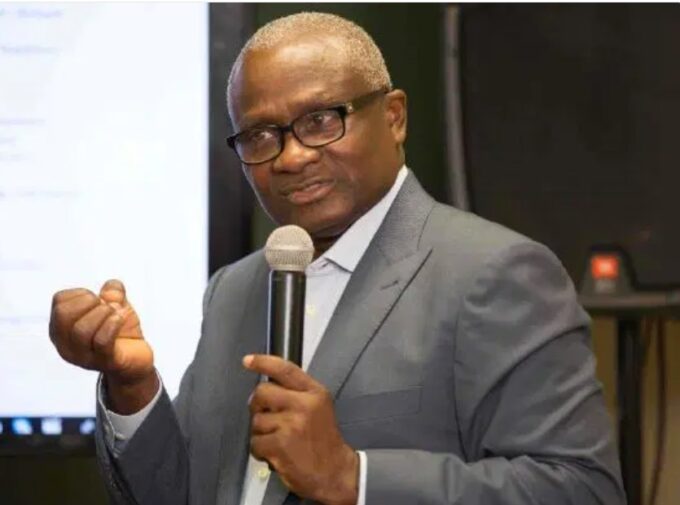
The President of the Society, Pharm. Ayuba Ibrahim Tanko, made the call on Tuesday, November 3, 2026, while delivering his presidential address at the opening ceremony of the 99th Annual National Conference of the PSN, tagged PSN-IJELE 2026, at the International Convention Centre, Awka, Anambra State.
Tanko urged the Federal Government to replace open drug markets with licensed Coordinated Wholesale Centres under strict regulatory supervision, insisting that the country’s pharmaceutical supply chain must remain under effective public authority.
He declared that drugs were not ordinary commodities, stressing that their misuse had serious public health, regulatory and national security implications.
“Drugs are a matter of permanent regulatory control and national security,” the PSN president stated, arguing that the government’s responsibility for the pharmaceutical supply chain could not be surrendered to private commercial interests.
The Society’s position comes amid controversy surrounding the Federal Government’s proposed Medipool initiative, which was approved by the Federal Executive Council in May 2025 as a National Group Purchasing Organisation (GPO).
While acknowledging the objectives of pooled procurement, including lower medicine prices, improved availability, transparency and support for local pharmaceutical manufacturers, the PSN expressed reservations about the structure and legal framework of the arrangement.
According to Tanko, the debate is not about rejecting the Group Purchasing Organisation concept but ensuring that its implementation complies with existing laws and does not undermine public accountability.
“The GPO idea itself has support. The debate is about structure and legality, not about pooled purchasing as such,” he said.
He questioned the suitability of handing over the supply chain of public health facilities to a private company, citing the Public Procurement Act 2007, the Pharmacy Council of Nigeria Act 2022 and the National Health Act 2014.
The PSN president also argued that international examples used to benchmark Medipool, including Kenya, South Africa, Singapore and Saudi Arabia, required closer examination, noting that prominent models such as Kenya’s KEMSA were publicly established institutions backed by law rather than private concessions.
Tanko maintained that the Federal Government should fast-track legislation establishing a Federal Drug Management Agency and strengthening the Drug Revolving Fund (DRF), which has operated in federal health institutions since 1989.
He explained that although the DRF was introduced to address medicine stock-outs and weaknesses in public-sector procurement, its reliance on administrative arrangements rather than a dedicated law exposed its funds to possible diversion and inconsistent management across successive administrations.
Citing state-level experiences, he pointed to Kano State, where medicine availability in primary healthcare centres reportedly increased from 6.5 per cent to over 90 per cent in 2026 following the establishment of a legally backed Drugs and Medical Consumables Supply Agency and the clearance of about N1.2 billion in inherited supplier debts.
He also cited Lagos State’s Sustainable Drug Revolving Fund, which he said had improved the availability of tracer medicines from 10 per cent to over 80 per cent across levels of healthcare.
Drug trafficking, banditry interconnected
Raising concerns over the security implications of pharmaceutical distribution, Tanko said the diversion and abuse of controlled medicines, particularly tramadol and pentazocine, had become significant contributors to insecurity.
He referenced the National Drug Law Enforcement Agency’s identification of diverted controlled medicines as a major factor associated with banditry, terrorism and violent extremism, adding that the agency estimates Nigeria’s drug-using population at approximately 14.3 million.
He further cited the November 2025 arrest of a suspected supplier of tramadol, codeine syrup and other drugs to bandits operating in Kaduna, Katsina, Zamfara and Sokoto states.
The PSN president also referenced the NDLEA’s interception of 1.6 million tramadol pills in July 2026 in a cross-border trafficking operation reportedly bound for Kano.
He argued that illicit pharmaceutical trade, money laundering and insecurity were interconnected, warning that unregulated drug markets and weak medicine traceability provided opportunities for smuggling and the financing of organised crime.
“Strict public custody of medicines, especially controlled and psychoactive medicines, from purchase to dispensing is therefore a security safeguard as well as a health one,” he declared.
Tanko also raised the alarm over the influx of fake and substandard medicines, citing NAFDAC’s reported destruction of counterfeit and substandard products worth approximately N1.5 trillion between June 2025 and June 2026, alongside 64 convictions.
He recalled that regulators sealed 3,027 shops, warehouses and stores during enforcement operations at Idumota, Lagos, in February 2025.
He questioned the adequacy of provisions holding private operators accountable for counterfeit products supplied through third parties and called for drug quality assurance to remain under public supervision by pharmacists accountable to government.
The PSN also raised questions about Medipool’s regulatory credentials, alleging that the company had been registered as a retail pharmacy rather than as a wholesaler or distributor with verifiable experience in large-scale pharmaceutical distribution.
The Society called for regulatory due diligence by the Federal Ministry of Health, particularly confirmation of the company’s compliance with the PCN Act 2022.
Seven-point prescription for pharmaceutical security
To address the concerns, the PSN outlined seven recommendations, including the declaration of pharmaceutical insecurity as a national security threat and the replacement of open drug markets with licensed Coordinated Wholesale Centres.
It also urged the integration of more than 10,000 community pharmacists into the national security architecture as frontline stakeholders capable of identifying and reporting suspicious pharmaceutical activities.
The Society called for the expansion of the NHIA’s Pharmacy First initiative, as proposed by the Association of Community Pharmacists of Nigeria.
Other recommendations include establishing a special fund against illicit financial flows in healthcare, funded through one per cent of assets seized from drug trafficking, to strengthen PCN enforcement and rehabilitation programmes.
The PSN further urged the Federal Government to fast-track the Federal Drug Revolving Fund and Drug Management Agency Bill, which it said had passed first reading at the House of Representatives in 2025.
Under the proposed framework, the Federal Drug Management Agency would serve as the central purchasing and supply platform, with any Medipool participation limited to competitively selected, non-exclusive roles such as pooled price negotiation or framework supply.
The Society also insisted that medicine purchasing, quality assurance, storage, dispensing and, particularly, the handling of controlled medicines should remain under government pharmacists working with the PCN, NAFDAC and NDLEA.
It proposed the establishment of a Presidential Committee on the Pharmaceutical Sector under President Bola Tinubu, to be chaired by a registered pharmacist recommended by the PSN, with representatives of the PCN, NAFDAC, NIPRD and the Society.
PSN hails NLC, TUC, JOHESU over CONHESS breakthrough
In another major development, the PSN commended the Nigeria Labour Congress (NLC), Trade Union Congress (TUC) and Joint Health Sector Unions (JOHESU) for their engagements with the Federal Government over the long-standing adjustment of the Consolidated Health Salary Structure (CONHESS).
Tanko praised the labour unions for the negotiations held on October 22 and 27, 2026, which he said had produced important commitments towards resolving the prolonged dispute over CONHESS adjustment.
He particularly acknowledged the contributions of two JOHESU representatives, including a pharmacist who served as the union’s spokesperson, during the negotiations.
According to him, the engagement secured an agreement for the payment of 19 months’ arrears of allowances owed to health workers, to be redeemed in three tranches over three months, beginning December 2026.
He also disclosed that the National Salaries, Incomes and Wages Commission (NSIWC) had undertaken to complete, within three weeks, an updated assessment of the financial implications of the CONHESS adjustment.
The updated costing is expected to enable the Presidential Committee on Salaries to grant the necessary approvals for implementation.
Tanko said the revision had become necessary because changes in staffing levels across federal health institutions might have affected the N49.6 billion projected cost contained in the Federal Government’s 2022 Technical Committee report.
He also commended the TUC for urging the Federal Government to honour the agreement that led to the suspension of an 84-day strike by health workers earlier in 2026.
The PSN president appealed to the NLC and TUC to sustain pressure on the government to ensure that the CONHESS adjustment was concluded with the necessary NSIWC circular and salary tables before the end of 2026.
The PSN described the resolution as an important step towards addressing the longstanding disparity between CONHESS and the Consolidated Medical Salary Structure (CONMESS), whose adjustment for medical doctors was implemented about 13 years ago.
Anambra hosts pharmacists for week-long conference
Welcoming delegates to the conference, Tanko expressed appreciation to the Governor of Anambra State for the hospitality extended to the pharmaceutical community.
He urged Nigerian pharmacists to embrace new opportunities in advancing professional practice and strengthening the healthcare system.
The 99th Annual National Conference is expected to feature scientific discussions, town hall meetings, the Society’s Annual General Meeting and social engagements designed to promote professional interaction and fellowship.
Tanko encouraged participants to take advantage of the conference activities and contribute meaningfully to discussions on the future of pharmacy practice in Nigeria.
He expressed optimism that the gathering would provide a refreshing and productive platform for addressing the challenges confronting the profession and the nation’s healthcare delivery system.