By John Attah
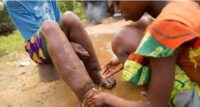
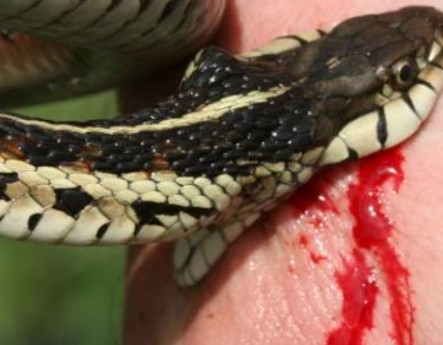
Fear is spreading through Internally Displaced Persons (IDPs) camps and farming communities in Makurdi and Guma Local Government Areas of Benue State following a reported rise in snakebite incidents, with victims battling for survival and families struggling to meet the cost of life-saving treatment.
The situation has raised fresh concerns over the safety of displaced persons and rural farmers, particularly as the harvest season approaches, when increased contact with snakes could expose more residents to potentially fatal attacks.
Among the latest victims is Doowuese Sei, a student of Joseph Sarwuan Tarka University, Makurdi, who was reportedly bitten by a snake while assisting her parents on their farm at Taki village in Makurdi Local Government Area on Thursday.
She is currently receiving treatment at Rahama Clinic along Gboko Road, Makurdi, but her family is appealing for urgent financial assistance to procure additional anti-snake venom needed for her treatment.
According to her parents, four bottles of anti-snake venom costing ₦800,000 have already been administered, but two additional bottles estimated at ₦400,000 are still required.
The family is therefore struggling to raise the additional money needed to continue her treatment.
Raising the alarm, Comrade Joseph Apahar Joo, Media and Publicity Officer of Internally Displaced Persons in Benue State, appealed to individuals, religious organisations, community leaders and members of the public to intervene before the situation deteriorates.
“I appeal to meaningful individuals, religious groups and the public to save the life of Doowuese Sei, a student of Joseph Sarwuan Tarka University, Makurdi. Mbagwen sons and daughters should humbly contribute. Let’s save the life of our dear daughter,” Joo pleaded.
The case, however, appears to be part of a wider concern involving vulnerable residents in the state.
Joo disclosed that two other snakebite victims, Shikuma Terhemba, an IDP taking refuge at Agagbe IDP camp, and Daniel Iorahii, from No. 1 Daudu IDP camp, were also receiving treatment at the Benue State University Teaching Hospital (BSUTH), Makurdi, under the care of the State Emergency Management Agency (SEMA).
The reported cases have heightened anxiety among displaced families already grappling with the challenges of insecurity, displacement and limited access to basic healthcare.
Harvest season raises fresh fears
Beyond the immediate cases, the IDP representative warned that the approaching harvest of guinea corn and beniseed could expose farmers to greater danger, particularly in December.
He explained that the traditional harvesting process for beniseed involves gathering the crops into bundles and leaving them to dry for about a week before pushing them down to extract the seeds.
According to him, snakes sometimes hide within the bundles, making the process potentially dangerous for farmers who handle the crops without adequate protection.
He recalled that farmers in previous years often carried cutlasses while handling harvested bundles because of the possibility of encountering snakes.
But he expressed concern that the situation could become more dangerous this year because of what he described as an alarming increase in the number of snakes across various communities.
“The situation can become more dangerous this year because of the alarming increase in the number of snakes in various communities,” Joo warned.
He urged farmers and residents to take precautionary measures, particularly by wearing protective footwear when working on farms, clearing bushes and handling harvested crops.
“We have to be careful. Buy your boot,” he advised.
Urgent intervention needed
The growing concern has placed the spotlight on the need for stronger emergency response, improved access to anti-snake venom and public awareness in vulnerable communities and displacement camps.
For families already struggling with the consequences of displacement, the high cost of treatment presents another burden, particularly when access to life-saving medication depends on urgent financial assistance.
The appeal for Doowuese’s treatment has therefore become a call for collective intervention, while the reported cases involving the two IDPs have underscored the need for sustained medical support in affected communities.
As farmers prepare for the harvest season, residents are being urged to remain vigilant and take protective measures to reduce exposure to snakebites.
For the affected families, however, the immediate concern is more urgent: securing the treatment needed to keep their loved ones alive.