By Desire Uzochukwu
More than seven in 10 respondents in a survey across six South-West states have experienced Kitto-related violence, but only 28 per cent of those affected reported their experiences, raising concerns over the growing incidence of online deception, blackmail, sexual exploitation and attacks in Nigeria.
The findings, released by the Improved Sexual Health and Rights Advocacy Initiative (ISHRAI), have prompted calls for stronger community action to protect vulnerable people and curb violence, including mob attacks, public humiliation and jungle justice.
The organisation warned that perpetrators were increasingly exploiting social media to lure unsuspecting individuals into dangerous encounters, with victims facing kidnapping, sexual abuse, extortion, psychological trauma and, in some cases, death.
It urged traditional rulers, religious leaders, women and youth groups to take a more active role in identifying cases, protecting victims and ensuring that allegations of criminal conduct were handled through lawful channels.
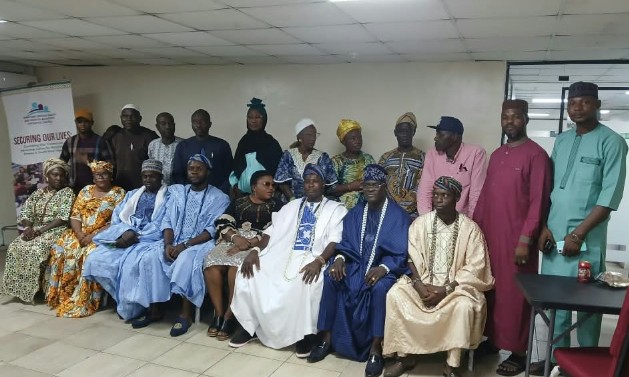
Speaking at a stakeholders’ engagement involving traditional and religious leaders, ISHRAI’s Programme Manager, Mrs Sophia Lawal, said community leaders must be equipped with the knowledge and referral mechanisms to identify and respond appropriately to Kitto-related violence.
Lawal said the engagement brought together 20 traditional and religious leaders, including women leaders, to deliberate on the threats facing marginalised people and develop community-based responses.
“It’s very important that we have community members, that’s the religious, traditional leaders, and also the women leaders, to have conversations around kitto violence that affects marginalized people in Nigeria,” she said.
“And we cannot address these issues without having the right people in the room to deliberate on this matter together so that they are equipped with the right, with the knowledge to actually handle such cases when they are being reported or how to even identify such cases in their immediate community.”
Providing details of the survey, the Executive Director community and Development Foundation and Board of trustee secretary of ISHRAI, Mr. Evans Enwefah said 240 people were interviewed across the six South-West states, with 71.3 per cent indicating that they had experienced Kitto-related violence.
However, only 28 per cent of those affected reported their cases, highlighting the extent of underreporting and the difficulties victims face in seeking help.
Explaining how perpetrators operate, Enwefah said many exploit social media to establish relationships with unsuspecting young men and women, build their confidence and lure them into physical meetings under false pretences.
Some victims, he said, are encouraged to travel long distances, with perpetrators offering to pay their transport fares, book hotel accommodation or even arrange flights.
But on arriving at the agreed locations, some discover that they have been lured into traps, where their phones and valuables are seized. Others are kidnapped, sexually assaulted, filmed in compromising situations or threatened with the publication of nude photographs.
The images are subsequently used to blackmail victims and extort money, often leaving them too ashamed or traumatised to disclose their experiences to family members or law enforcement agencies.
Enwefah said some victims resorted to stealing and other desperate measures to meet the demands of blackmailers, while others suffered severe psychological trauma.
Beyond the individual attacks, he expressed concern over mob violence and killings arising from rumours and allegations circulated online, warning that innocent people had lost their lives without investigations.
“We have seen mob violence. We have seen several persons have been killed, some of them innocently. People who are not supposed to be killed are killed,” he said.
He urged communities to reject jungle justice and ensure that allegations were properly investigated through established legal and law enforcement channels.
“Instead of taking laws in your hand, you report to the leaders of the community. The leaders do a follow-up, do their investigation, also using the state machinery,” he said.
“Then those that need to be truly punished, let them be punished according to the law of the land, not on the basis of what a group of persons decide at any point.”
The organisation also called for the protection of victims’ identities, warning that public exposure, rumour-mongering and stigmatisation could deepen their trauma and discourage others from reporting abuse.
Lawal said human rights protection must extend beyond the provision of medical services to addressing discrimination and violations based on people’s status or identity.
“Human rights is still very much in that, so the right to not be discriminated because of your status. So as much as we give medication, we also fight against any discrimination based on your status,” she said.
She disclosed that ISHRAI planned to establish a referral pathway through a WhatsApp platform involving the participating community leaders, alongside a directory of government agencies and organisations that could provide assistance.
The referral network would link victims to the National Human Rights Commission, the Lagos State Domestic and Sexual Violence Response Agency, the Office of the Public Defender and other relevant support institutions.
Also speaking, Health Education Officer with the Lagos State Primary Health Care Board, Lagos State Health District 6, Mrs Rashida Sanni’Afolabi, said traditional rulers, religious leaders and ward health committee members were strategically positioned to promote awareness and connect vulnerable people to appropriate services.
She said community stakeholders must avoid victim-blaming and create an environment where survivors could freely report abuse without fear of judgment.
“Take for instance, someone that’s been raped, a lady that’s been raped, we should not start with the question of why were you raped, probably because she didn’t dress well, but we should remember that we need to address the issue first, so that people can feel safer, they will be able to come out and tell us how they feel,” she said.
Sanni’Afolabi urged health workers and community stakeholders to incorporate awareness of rights, sexual and gender-based violence and available support services into school health programmes and other community interventions.
The stakeholders stressed the need for closer collaboration among traditional institutions, religious organisations, government agencies and civil society groups to strengthen reporting, protect survivors and ensure that allegations of criminal conduct were handled through lawful channels.
ISHRAI said it would continue to support community leaders with information and referral services, stressing that public awareness, respect for human dignity and rejection of violence were essential to preventing further victimisation.