With Ebola cases in the Democratic Republic of the Congo (DR Congo) surpassing 10,000 and deaths approaching 5,000, the outbreak has placed increasing pressure on humanitarian and public health response efforts. In Nigeria, 53 contacts are currently under monitoring following the confirmation of a Bundibugyo Ebola case in the Federal Capital Territory.
In this interview with InsightWireNewsNG, Dr Rotimi Adesanya, a Family and Public Health Physician, Fellow of the Academy of Public Health (FAPH) and Director of Medical Services, discusses why Ebola continues to re-emerge, what makes the disease deadly, available treatment options and Nigeria’s preparedness to detect, isolate and contain the infection.
Excerpts:
What makes Ebola so deadly, and how does the virus damage the human body to the point of causing death?
Ebola Virus Disease is one of the most dangerous infectious diseases known to mankind because of its ability to overwhelm the body’s immune system and cause severe damage to multiple vital organs within a relatively short period.
The Ebola virus attacks important cells of the immune system, particularly macrophages and dendritic cells, which ordinarily help the body recognise and fight infections. By disrupting these defence mechanisms, the virus can multiply rapidly and spread throughout the body.
As the disease progresses, it triggers an excessive inflammatory response, damages the lining of blood vessels and interferes with normal blood circulation and clotting mechanisms.
Patients may develop severe vomiting and diarrhoea, leading to significant fluid loss, dehydration and electrolyte imbalance.
These complications can result in dangerously low blood pressure, circulatory shock and inadequate blood supply to vital organs. The liver and kidneys may become severely affected, while abnormalities in blood clotting can cause bleeding in some patients.
Contrary to popular belief, not every Ebola patient experiences bleeding. In fact, severe dehydration, shock and multiple organ failure are among the major causes of death.
However, Ebola is not automatically a death sentence. With early recognition and appropriate treatment, many patients can survive.
Why do some Ebola patients survive while others die, and how important are early diagnosis and treatment?
Survival from Ebola depends on several factors, including the severity of infection, the particular Ebola virus involved, the patient’s immune response, underlying medical conditions and, most importantly, how quickly appropriate medical care begins.
Patients who receive treatment early generally have better chances of survival than those who present late with severe dehydration, shock or organ failure.
Early diagnosis allows healthcare professionals to commence intravenous fluid replacement, correct electrolyte abnormalities, monitor kidney and liver function and provide other essential supportive treatments before complications become irreversible.
For certain Ebola infections, particularly those caused by the Zaire Ebola virus, effective monoclonal antibody treatments are also available.
Unfortunately, in many African communities, patients may initially mistake Ebola symptoms for malaria or typhoid fever. Some resort to self-medication, traditional remedies or unregulated treatment centres, resulting in dangerous delays.
In Nigeria, where malaria is endemic, this presents a particularly important diagnostic challenge.
A patient with fever, weakness and headache may initially be treated for malaria without consideration of Ebola, especially if the healthcare professional fails to obtain a proper travel and exposure history.
It is therefore important for healthcare workers to ask patients about recent travel, contact with sick individuals and possible exposure to confirmed or suspected Ebola cases.
Early diagnosis saves two lives: the life of the infected patient and potentially the lives of others who might otherwise become infected.
Prompt isolation and notification of public health authorities also prevent further transmission within hospitals, families and communities.
With advances in modern medicine, why does Ebola remain difficult to treat, and what treatment options are currently available?
Despite remarkable advances in medical science, Ebola remains difficult to manage because it can progress rapidly, damage several organs simultaneously and cause life-threatening complications before patients reach appropriate healthcare facilities.
Another important challenge is that Ebola disease can be caused by different strains of viruses, and treatments developed for one type may not be effective against another.
However, significant progress has been made.
Two monoclonal antibody treatments, Inmazeb (REGN-EB3) and Ebanga (ansuvimab), have demonstrated effectiveness against Ebola disease caused by the Zaire Ebola virus.
These medications work by targeting the virus and preventing it from entering or infecting additional cells.
There is also an effective vaccine, Ervebo, used to prevent disease caused by the Zaire Ebola virus.
Vaccination is particularly valuable in protecting people at high risk during outbreaks. Nevertheless, these treatments and vaccines are not approved for every type of Ebola virus.
For example, there are currently no approved virus-specific treatments or vaccines for Bundibugyo Ebola Virus Disease, making supportive care and prevention especially important.
Treatment therefore includes intravenous fluids, electrolyte correction, oxygen therapy when indicated, blood pressure support, nutritional support, treatment of associated infections and intensive monitoring of organ function.
The provision of these interventions requires adequately equipped isolation facilities and properly trained healthcare workers.
For Nigeria, the major lesson is that access to modern medicines must be accompanied by investment in functional treatment centres, diagnostic laboratories and a competent emergency-response workforce.
Scientific discoveries alone cannot defeat Ebola unless patients can access appropriate treatment early enough.
What are the early symptoms of Ebola that people often mistake for other illnesses, and when should they seek urgent medical attention?
One of the greatest challenges in identifying Ebola is that its early symptoms closely resemble those of common illnesses in Nigeria, particularly malaria, typhoid fever and other febrile infections.
The initial symptoms commonly include sudden fever, severe headache, generalised body weakness, muscle and joint pains, sore throat, fatigue and loss of appetite.
As the disease progresses, patients may develop vomiting, severe diarrhoea, abdominal pain and dehydration. In more severe cases, bleeding, confusion, shock and organ failure may occur.
It is important to emphasise that bleeding is not necessary for a diagnosis of Ebola. Waiting until a patient begins bleeding before suspecting Ebola could be a fatal mistake.
The incubation period ranges from two to 21 days following infection.
Nigerians should seek urgent medical evaluation if they develop compatible symptoms after travelling to an area experiencing an Ebola outbreak or after having contact with a suspected or confirmed patient.
Individuals who have had a recognised high-risk exposure should report immediately to public health authorities, even if they have not developed symptoms.
People should avoid self-medication and unnecessary movement between healthcare facilities.
Where Ebola is suspected, they should contact the appropriate public health authority or designated health facility before travelling, so that safe assessment and transportation arrangements can be made.
Healthcare workers must also remember that malaria and other common illnesses remain important alternative diagnoses and may require simultaneous investigation and treatment.
My advice to Nigerians is simple: not every fever is Ebola, but every unexplained fever accompanied by a relevant exposure history deserves serious medical attention.
What are the biggest challenges Nigerian hospitals would face in treating an Ebola patient while protecting healthcare workers and other patients?
The management of Ebola presents enormous challenges for healthcare institutions, particularly in developing countries where health infrastructure and resources may be inadequate.
One major concern is the limited availability of fully equipped isolation and treatment facilities across many healthcare institutions.
Although designated treatment centres exist, not every hospital has the infrastructure, trained personnel or protective equipment required to manage a suspected Ebola patient safely.
Healthcare workers are particularly vulnerable when caring for patients without appropriate personal protective equipment.
Doctors, nurses, laboratory scientists, cleaners, ambulance personnel and other hospital workers must therefore receive adequate training in infection prevention and control.
Proper use of personal protective equipment, especially safe removal after patient care, is essential.
Hospitals must also establish effective screening and triage systems so that suspected cases can be identified and separated from other patients immediately.
Overcrowded emergency departments, inadequate water supply, irregular electricity, poor waste management and shortages of trained personnel may complicate these efforts.
Another concern is the possibility of fear among healthcare workers, especially when adequate protection and institutional support are lacking.
Government and hospital management must therefore provide protective equipment, continuous training, psychological support and clear occupational exposure procedures.
Healthcare workers are the first line of defence against Ebola.
If we fail to protect them, we weaken the entire healthcare system and increase the risk of hospital-based transmission.
Why does Ebola continue to re-emerge despite decades of research, surveillance and outbreak-control efforts?
Ebola continues to re-emerge because it is fundamentally a zoonotic disease, meaning that the virus can be transmitted from animals to humans.
Certain fruit bats are considered likely natural reservoirs for some Ebola viruses, although the ecology and precise pathways of transmission are not fully understood.
Human infection may occur through contact with infected wildlife or their bodily fluids. Activities such as hunting, handling or butchering infected wild animals may increase the risk of exposure.
Environmental changes, deforestation, agricultural expansion and increasing human interaction with wildlife may also create opportunities for disease transmission.
Another challenge is that Ebola viruses can persist in certain body fluids of survivors after recovery, occasionally resulting in renewed transmission.
In addition, surveillance systems in some affected countries remain weak, particularly in remote communities where access to healthcare and laboratory services is limited.
Conflict, population displacement, poverty and distrust of public health authorities can further complicate outbreak-control efforts.
International travel and migration also mean that an infection originating in one community can potentially spread across national borders.
Therefore, Ebola cannot be controlled through hospital treatment alone. It requires a comprehensive One Health approach, integrating human health, animal health and environmental surveillance.
African governments must strengthen wildlife disease monitoring, community-based surveillance, laboratory capacity and cross-border collaboration.
As long as the virus continues to circulate in its natural environment, the possibility of future outbreaks will remain. Our responsibility is to detect outbreaks early and prevent them from becoming major epidemics.
How does Ebola generate fear and panic, and what can public health authorities do to prevent misinformation and stigma from worsening an outbreak?
Ebola generates considerable fear because of its historical association with high mortality, severe illness and the possibility of rapid transmission within families and healthcare settings.
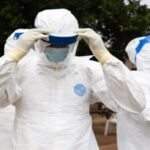
Images of healthcare workers wearing protective suits and reports of patients dying can create anxiety, especially in communities where accurate health information is limited.
Unfortunately, fear sometimes leads to misinformation, discrimination and harmful practices.
During Nigeria’s 2014 Ebola outbreak, false information circulated suggesting that drinking or bathing with salt water could prevent infection. Such misinformation demonstrated how dangerous rumours can become during public health emergencies.
Fear may also cause infected individuals to conceal symptoms, avoid hospitals or resist contact tracing.
Some survivors may experience rejection from their communities even after they have recovered and are no longer infectious through ordinary social contact.
The Nigeria Centre for Disease Control and Prevention, state ministries of health and other relevant agencies should provide regular, transparent and scientifically accurate information.
Health education and awareness should be communicated in English and major Nigerian languages, including Yoruba, Hausa, Igbo and relevant local languages.
Traditional rulers, religious leaders, community organisations, journalists and social media influencers should be actively involved in public education.
Authorities must also respond promptly to rumours and provide practical explanations of how Ebola spreads and how it can be prevented.
The public should understand that Ebola is not spread through ordinary airborne transmission in the same manner as measles. Transmission generally requires direct contact with infectious body fluids or contaminated materials.
Fear thrives where accurate information is absent. The best antidote to public panic is timely information, transparency and public trust.
What factors determine whether an imported Ebola case is contained quickly or develops into a wider outbreak?
The difference between a single imported Ebola case and a major outbreak often depends on how quickly the healthcare and public health systems respond.
Nigeria’s experience during the 2014 Ebola outbreak provides an important example.
When Ebola was introduced into Lagos in July 2014, the country faced the possibility of widespread transmission, particularly because 3Lagos is one of Africa’s most densely populated commercial centres.
However, coordinated public health intervention, isolation of suspected cases, contact tracing, laboratory testing and community mobilisation helped contain the outbreak.
Nigeria recorded 20 cases and eight deaths during that outbreak, but transmission was successfully interrupted.
Several factors determine whether an imported case is contained.
First is early recognition of the suspected case. Second is immediate isolation and implementation of appropriate infection prevention measures. Third is rapid laboratory confirmation and effective contact tracing. Fourth is the identification and monitoring of exposed individuals throughout the recognised incubation period of 21 days. Other important factors include the availability of trained personnel, adequate funding, political commitment, effective communication and public cooperation.
An imported case becomes particularly dangerous when the patient visits multiple healthcare facilities before diagnosis or has extensive contact with family members and healthcare workers without appropriate precautions. Population mobility can also complicate contact tracing.
The lesson from Nigeria’s 2014 experience is that Ebola can be contained even in a highly populated environment when public health authorities act quickly, decisively and in a coordinated manner.
How prepared is Nigeria to detect, isolate and contain an Ebola case, particularly in densely populated cities with high population movement?
Nigeria is better positioned to respond to Ebola today than it was before the 2014 outbreak, particularly because of improvements in disease surveillance, laboratory capacity and emergency-response coordination.
The establishment and strengthening of the Nigeria Centre for Disease Control and Prevention have provided an important institutional framework for managing infectious disease emergencies.
Nigeria also has experience from previous Ebola preparedness activities, Lassa fever outbreaks and the COVID-19 pandemic.
These experiences have contributed to improvements in emergency operations, disease reporting, laboratory diagnosis and public health coordination.
In May 2026, the NCDC issued a national preparedness advisory concerning Bundibugyo Ebola Virus Disease and identified Lagos, Rivers, the Federal Capital Territory and several other states as priority areas for heightened preparedness.
The advisory emphasised surveillance, isolation facilities, healthcare worker protection, laboratory readiness and contact tracing.
The Federal Government also announced additional preparedness measures, including the establishment of a Presidential Task Force on Ebola and approval of ₦10 billion in emergency intervention funding in June 2026.
These are encouraging developments. However, announcements and preparedness plans must be translated into practical operational capacity.
The major challenge is ensuring that all states, local government areas and frontline healthcare facilities can recognise and respond appropriately to a suspected case.
Cities such as Lagos, Abuja, Port Harcourt and Kano present particular challenges because of high population density, commercial activities, international travel and extensive movement of people.
An infected individual could potentially visit several hospitals, pharmacies or informal healthcare providers before Ebola is suspected.
Therefore, preparedness should not be measured merely by the existence of national emergency-response plans.
It should be assessed through practical indicators such as the availability of functional isolation centres, adequately trained personnel, diagnostic turnaround times, protective equipment and the ability to trace exposed individuals rapidly.
Regular simulation exercises should be conducted in both public and private hospitals.
In my assessment, Nigeria has developed important public health structures and experience, but we must avoid complacency. Our preparedness is only as strong as the weakest healthcare facility through which an Ebola patient may first enter the system.
What critical weaknesses in Nigeria’s surveillance systems, health facilities and emergency response need to be addressed to prevent another outbreak?
Nigeria must urgently address several structural weaknesses in its healthcare and public health systems if we are to prevent future Ebola outbreaks from escalating.
The first is inadequate surveillance at community and primary healthcare levels. Many infectious disease outbreaks begin in communities where healthcare facilities may lack trained personnel, diagnostic capacity and effective disease-reporting systems.
Strengthening disease surveillance officers and community health workers at local government level is therefore essential.
The second weakness is inadequate infection prevention and control infrastructure.
Some healthcare facilities still struggle with unreliable water supply, electricity, waste disposal systems and shortages of personal protective equipment. These deficiencies increase the risk of healthcare-associated infections.
Thirdly, Nigeria must improve laboratory capacity and specimen transportation systems to ensure that suspected Ebola cases can be tested rapidly and safely.
Fourthly, we need more functional isolation and treatment facilities strategically located across the country. Such facilities should not exist merely on paper. They must be equipped, maintained and regularly assessed for operational readiness.
Fifthly, emergency-response funding must be timely, adequate and accountable.
Funds allocated for epidemic preparedness should support practical improvements in surveillance, staff training, protective equipment, ambulance services, laboratory systems and emergency medical logistics.
Another critical area is continuous professional training. Doctors, nurses, laboratory personnel and other frontline healthcare workers require regular refresher training in recognising suspected Ebola cases, using protective equipment and implementing appropriate isolation procedures.
Private hospitals, primary healthcare centres and traditional community structures must also be incorporated into national preparedness programmes.
Nigeria should strengthen cross-border surveillance and collaboration with neighbouring countries, particularly at international airports, seaports and land borders.
However, screening at points of entry must be complemented by strong community surveillance because infected travellers may arrive before developing symptoms.
Finally, public health education must become a continuous activity rather than something introduced only when an outbreak occurs. My strongest recommendation is that Nigeria should move from a reactive approach to disease outbreaks towards a sustainable, preventive and community-driven public health system.